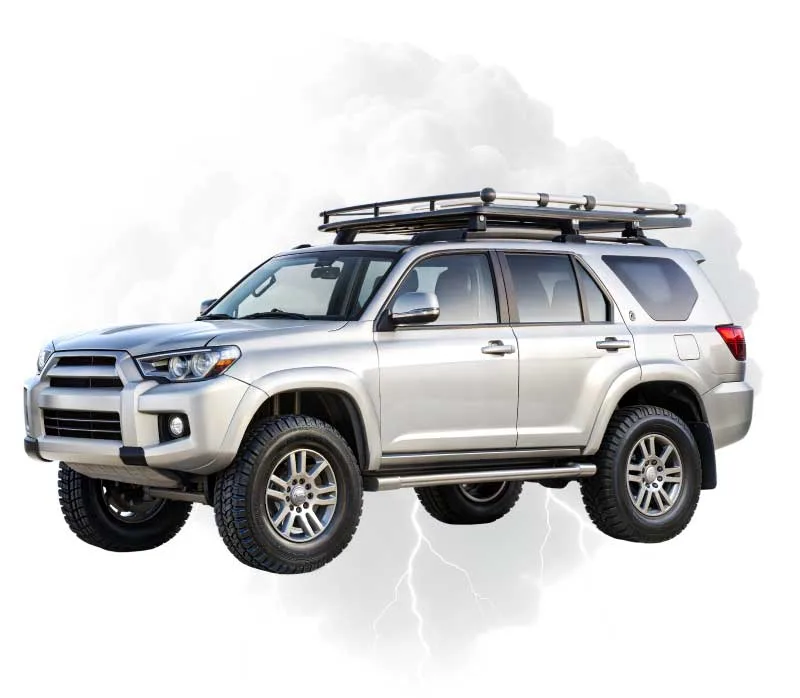
If you were driving around the downtown area of Colorado Springs on June 23, 2026, there is a very good chance that your vehicle has some hail damage. Many residents are saying that it’s the biggest sized hail that they’ve seen in over 30 years.
Hail Storms – Recent History in ‘The Springs’
Now, if you’ve been a longtime resident of The Springs, you might argue that the August 2018 hail storm is the uncontested winner of the worst hail storm to EVERY hit Colorado Springs. If you remember, not only were 2 birds killed at the Cheyenne Mountain Zoo but 14 zoo visitors were injured. The parking lot looked like a memorial for hail damaged cars with shattered windshields and dents the size of grapefruits covering hoods, roofs, and trunk lids. Yes, this was one of those “national headlines” kind of catastrophic situations.
Let’s put these 2 massive Colorado Springs hail storms side by side and check the statistics.
June 23, 2026 Colorado Springs Hail Storm
The June 23, 2026 event was part of a highly volatile Front Range weather pattern that brought consecutive days of severe weather to the region.
- Hail Size & Characteristics: The storm dropped a broad swath of golf-ball to hen-egg sized hail balls (measuring up to 1.75 inches in diameter).
- Primary Footprint: It primarily targeted central and northern Colorado Springs, moving over the Old North End, Downtown, Patty Jewett, Briargate, Stetson Hills, Rockrimmon, Cimarron Hills, and the Black Forest.
- Auto Insurance Claim Volume: Because the hail mostly capped at 1.75 inches, vehicle damage was widespread but largely consisted of heavy denting, cracked windshields, and traditional cosmetic comprehensive claims. While it contributed to a significant surge in seasonal Front Range comprehensive claims, it did not reach the history-making, vehicle-totaling extremes of the 2018 season.
August 6, 2018 Colorado Springs Hail Storm
The August 6, 2018 supercell remains one of the most violent and punishing hail events in Colorado Springs history, specifically regarding catastrophic vehicle damage.
- Hail Size & Characteristics: This storm produced massive, wind-driven softball-sized hail measuring up to 4 inches in diameter.
- Primary Footprint: It tore directly through the highly populated southern metro corridor, severely battering southeast Colorado Springs, Fort Carson, Stratmoor, and the Security-Widefield area.
- Auto Insurance Claim Volume: The sheer velocity and volume of the 4-inch stones resulted in an staggering 21,000 auto insurance claims from this single afternoon event alone (alongside 6,000 property claims), totaling roughly $172.8 million in insured losses.
- Severity of Auto Damage: Unlike the typical body denting seen in 2026, the 2018 softball hail completely shattered entire windshield structures, smashed through panoramic sunroofs, and instantly totaled thousands of vehicles on impact. It struck major outdoor parking areas—most notably at the Cheyenne Mountain Zoo (where it injured attendees and damaged hundreds of visitor vehicles) and Fort Carson military vehicle lots.
Which severe hail occurrence in Colorado Springs produced more auto hail damage claims?
The August 6th, 2018 Colorado Springs hail storm has it.
While the June 23, 2026 storm was an expensive nuisance that has been keeping us busy here at Superior Dent Solutions, the August 2018 storm was a historically destructive anomaly due to the giant, window-shattering stone sizes that completely overwhelmed local insurance adjusters and write-offs.
There is some good news! Less “total loss” auto hail damage claims and more PDR repairable cars!
Schedule your Colorado Springs Auto Hail Repair TODAY at Superior!
We have openings but openings are filling up fast. Every repair comes with a comprehensive auto hail damage estimate, complete insurance and adjuster support, a lifetime warranty on ALL hail repairs, and the peace of mind that we are the BEST auto hail repair shop in Colorado Springs!
Schedule online or call us at (719) 822-2212 to save your space! See our latest promotion below!